


Swarmer goes public: a story of technology, war, and high expectations
What is Swarmer - and why is it being talked about?
Swarmer is a defense-tech startup with Ukrainian roots that was founded quite recently, in 2023. At first glance, it seems like just another tech company. But upon closer inspection, it becomes clear that it operates in a field that has the potential to change the very nature of warfare.
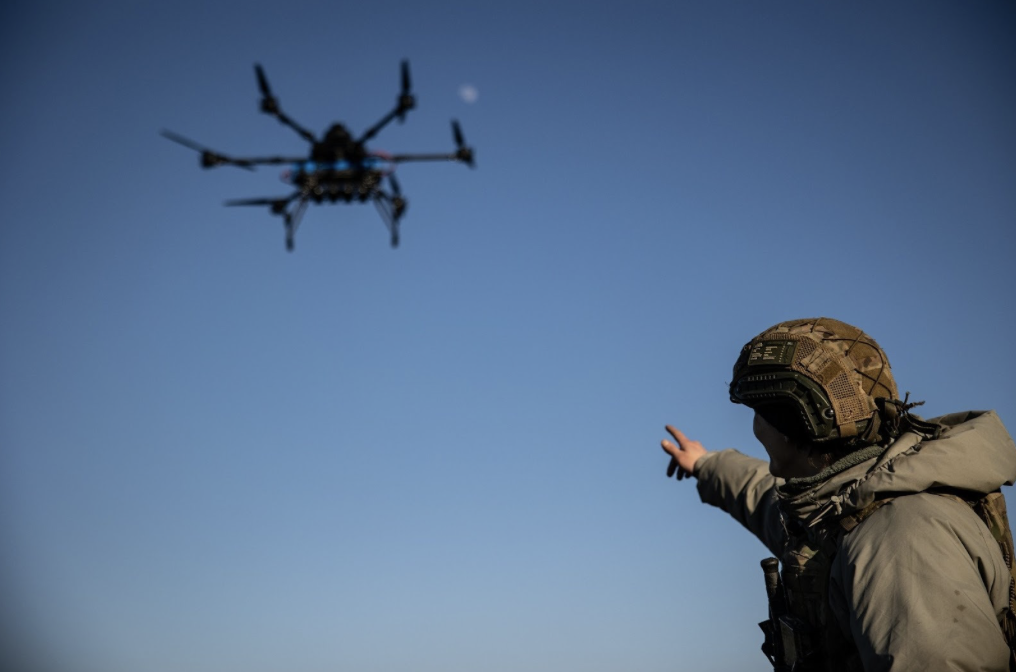
Swarmer’s core concept is controlling “swarms” of drones using artificial intelligence. Not one drone, not two - but dozens, sometimes even hundreds, that act as a single system. It sounds almost like science fiction, but in practice, it all looks quite pragmatic:
a single operator can control a large number of drones
the drones cooperate with each other
they can operate even in challenging conditions, without a stable GPS signal
In other words, instead of individual drones - an entire “swarm” that thinks like a single entity. And it was this idea that became the key reason for the interest in the company.
The IPO: unexpected but impressive
When Swarmer announced its IPO on the NASDAQ, many viewed it as a bold, even risky move. The company is still young, its financial performance is far from stable, and the defense-tech market is complex and competitive. On the other hand, the timing was perfectly chosen.
The world is experiencing a new wave of interest in military technology. Governments are increasing defense budgets, investors are looking for the “next big trend,” and security-related technologies have suddenly shifted from being niche to central. The IPO was relatively modest - the share price was low. However, this was followed by something the market loves: a sharp rise.
Market reaction: euphoria or speculation?
The first few days after the IPO became a real show. The stock price skyrocketed several times over, and then kept rising. To an outside observer, it looked like classic “hype.” But here it’s important to understand a few things.
First, such sharp price movements often happen with small companies. When the number of shares available for trading is limited(3.45 million on the day of the IPO) even relatively modest demand can drive the price up significantly.
Second, investors today are very sensitive to “stories.” And Swarmer has a compelling story: Ukrainian origins, practical use in war, artificial intelligence, drones. It’s a combination that’s hard to ignore. Does this mean the company is already “worth” the valuations assigned by the market?
Swarmer’s strengths: where the real potential lies
If we ignore the hype, emotional reactions, and sharp stock price swings, and take a more objective look at Swarmer, it becomes clear that interest in the company didn’t come out of nowhere. It has several truly strong points that fit well into the current technological and military landscape.
A technology that arrived “just in time”
Some startups are ahead of their time - and so they remain unnoticed for a long time. Others emerge just when the market is “ready.” Swarmer falls more into the second category. The world is actively moving toward self-sufficient systems. This is apparent not only in the military sphere but also in the civilian sector: driverless cars, automated warehouses, and robots in logistics. Yet, this transformation is most rapid in the military context.
Drones are no longer just a “support tool.” They are becoming the backbone of many operations. And the next logical step is not just using them, but coordinating a large number of devices as a single system. This is exactly where Swarmer comes in.
The company isn’t just creating another drone. It operates at the “superstructure” level - a control system capable of integrating many elements into a single entity. This is a complex, but also a more promising niche.
Not just a promise, but proven experience
One of the biggest challenges facing tech startups is the gap between presentation and reality. The slides look convincing. The demos are even better. But when it comes to actual use, many complications arise.
In this regard, Swarmer looks more convincing than many other early-stage companies. Their technology has already been applied in real-world conditions. This is a very important point. After all, war is an environment where:
there are no “ideal scenarios”
there are many unpredictable factors
every mistake comes at a high price
If the system works there, that’s a strong point in its favor. For an investor, this means one thing: the risk is still high, but it’s no longer “blind.”
Flexibility as a competitive advantage
Large defense corporations have resources, connections, and years of experience. At the same time, however, they often have factors that prevent them from moving quickly - complex structures, bureaucracy, and lengthy decision-making processes.
Startups operate differently. As a small company, Swarmer can test new ideas faster, make changes, and adapt to real-world needs. In an environment where technology changes literally every month, this becomes critically important. Especially when you consider that modern conflicts are not static situations, but a constant evolution. Those who adapt faster often gain the advantage.
Risks that remain
Potential always comes with risks. And in the case of Swarmer, those risks are quite significant.
Finances: a classic problem for startups
Despite all its technological achievements, Swarmer remains a young company. It is not yet profitable - and, on the one hand, that’s normal. Most startups go through this phase. For investors, however, this means the company relies on external funding, future growth still needs to be “proven,” and any delays or issues could significantly impact the stock price. In other words, this is not a stable business, but a venture with a high degree of uncertainty.
Geopolitics as a factor that cannot be controlled
Defense technology is a sector directly linked to global events. Demand for such technologies can grow rapidly - but it can also change just as quickly. This depends on conflicts, political decisions, and government budgets. This makes the market unstable in terms of traditional market dynamics.
For a company, this means that even with a good product, a lot depends on factors beyond its control.
Competition: When the Giants Take the Field
For now, Swarmer appears to be a fast-moving and innovative player. However, if the “drone swarm” market becomes truly large, major companies will surely get involved. They have significantly more capital, access to government contracts, and established production processes. Then, the competition could shift from “startup versus startup” to “startup versus the industry.”
Regulations: an invisible but powerful barrier
There is another factor that is often overlooked but is of great importance: regulations. Defense technology is one of the most regulated sectors in the world. This means export restrictions, government monitoring, and complex certification procedures. Sometimes, these very factors can slow down the development of even the most advanced technologies.
Why investors are still interested
Despite all the risks, the interest in Swarmer is easy to explain. Investors aren’t just looking for stable companies - they’re looking for ones that can grow tenfold. It’s precisely these kinds of stories that usually seem risky at first.
In addition, there’s another important factor - the psychological one. Today, many people want to invest not only in profit but also in “meaning.” Swarmer, as a company with Ukrainian roots operating in the context of war, evokes an emotional response. This also influences the market.
To understand Swarmer’s potential, it’s worth taking a broader view. War is changing. It is evolving rapidly. Previously, tanks, planes, and the size of the army were decisive factors, but now technology, data, and autonomous systems are becoming increasingly important. Drones are just the beginning. The next step is their coordination, automation, and integration into a single entity. Swarmer finds itself in a very interesting position here.
Conclusion
Swarmer isn’t just another IPO. It’s an example of how technology, war, and financial markets intertwine in today’s world. It’s a story of innovation, risk, emotion, and high expectations. Perhaps Swarmer will become one of the key companies of the new generation of defense tech. Or perhaps it will remain a brief but vivid episode in the market. However, one thing is already clear: stories like this shape the future.