


Anthropic IPO 2026: What Investors Should Know About the AI Giant’s Market Debut
Five years ago, Anthropic was a young artificial intelligence company trying to build safer and more reliable AI systems. In November 2026, it became one of the biggest IPO stories the stock market has ever seen. The company behind Claude priced its initial public offering at $83 per share and began trading on Nasdaq on November 19 under the ticker ANT. After the underwriters fully exercised their option to buy additional shares, the IPO involved 1.127 billion shares and generated approximately $93.5 billion in gross proceeds. Anthropic itself received around $91.6 billion before expenses.
At the IPO price, the company was valued at roughly $1.5 trillion on a fully diluted basis - an extraordinary figure for a company founded only in 2021, however the size of the IPO is only half the story. Anthropic is now asking public-market investors to answer a much harder question: How much should you pay today for a company operating in one of the fastest-growing - and most expensive - industries in the world.
What Happened With the Anthropic IPO?
Anthropic had been preparing for a public listing for months. The company confidentially submitted a draft registration statement to the SEC in June 2026 and later filed its public S-1 in October. Its registration became effective on November 18. The final IPO price was set at $83 per share. The shares began trading on Nasdaq under the ticker ANT.
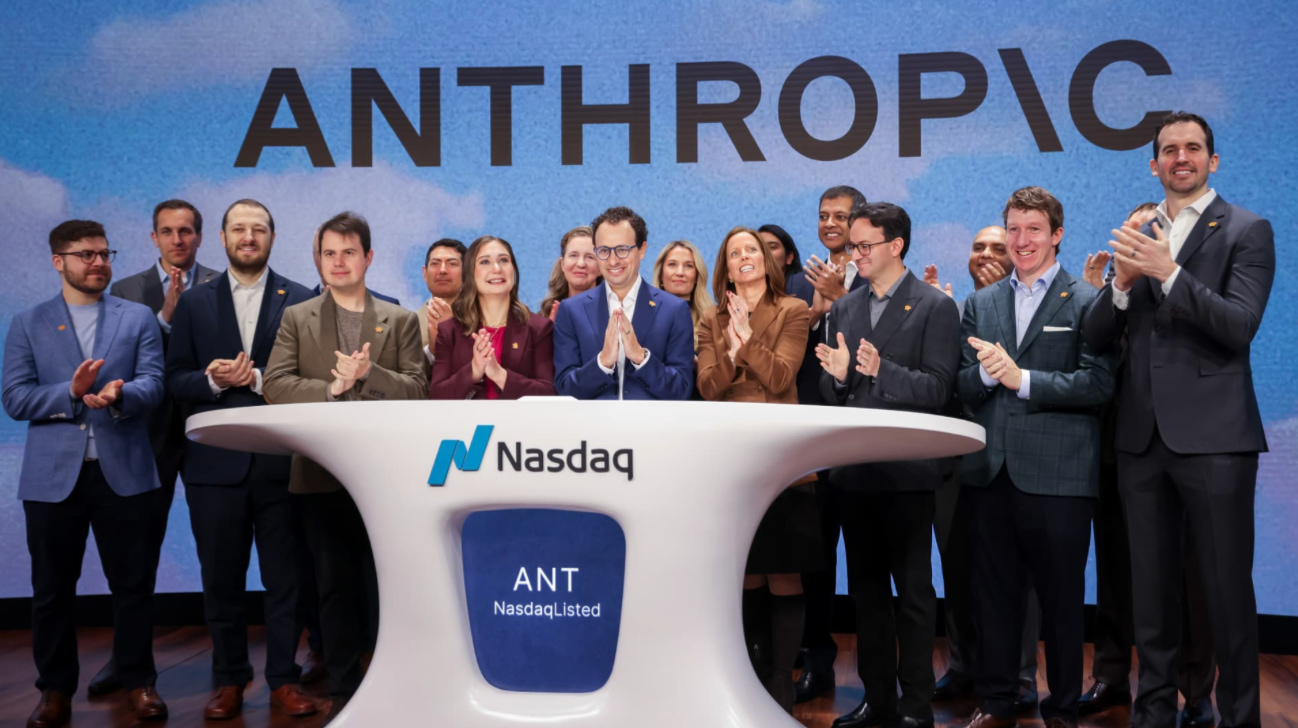
Demand was strong enough for the offering to be expanded, and the underwriters exercised their full option for additional shares. The first trading day demonstrated just how much attention surrounded the listing. Anthropic shares opened at $111.50, well above the $83 IPO price, and briefly pushed the company’s market value above $2 trillion. The first-day close was $97.17, around 17% above the offer price. However, the enthusiasm did not move in a straight line.
By November 24, the stock had fallen back toward its IPO price. That short period tells investors something important about major IPOs: a famous company can have a successful IPO and still experience extreme volatility almost immediately.
Why Is Anthropic Such a Big Deal?
Anthropic was founded in 2021 and is led by co-founders Dario Amodei and Daniela Amodei. The company describes itself as a public benefit corporation focused on developing advanced AI responsibly, with research centered on building AI systems that are reliable, interpretable, and steerable.
Its best-known product is Claude, but the business goes far beyond a consumer chatbot. Anthropic generates revenue through enterprise AI tools, subscriptions, usage-based access to its models, developer tools, and partnerships with major cloud platforms. That enterprise focus has become one of the key parts of the investment story. AI isn't only being used to answer questions or generate text anymore.
Companies increasingly use models for:
software development,
data analysis,
research,
customer support,
document processing,
automation,
and increasingly sophisticated AI agents.
If AI becomes a core layer of corporate technology infrastructure, the potential market is enormous. Anthropic is effectively asking investors to believe that it can become one of the companies providing that infrastructure.
The Numbers Behind the Growth Story
The most striking part of Anthropic's IPO documents is the speed at which revenue has grown.
Revenue increased more than tenfold between 2024 and 2025. Then, during the first six months of 2026 alone, Anthropic generated $16.3 billion, compared with approximately $1.16 billion during the same period a year earlier. That's extraordinary growth, however, here's where the investment story becomes more interesting.
AI revenue is expensive to produce. Training and running advanced models requires huge amounts of computing infrastructure. During the first half of 2026, Anthropic spent approximately $8.9 billion on computers and infrastructure, equivalent to around 55% of revenue for the period. So the investment question isn't simply: “Can Anthropic keep growing?”. It's also: “Can revenue grow faster than the enormous cost of providing frontier AI?”. That may ultimately matter much more.
From $965 Billion to $1.5 Trillion
Anthropic's valuation also tells an interesting story. In May 2026, the company raised $65 billion in private funding at a $965 billion post-money valuation. Only months later, the IPO priced the company at roughly $1.5 trillion on a fully diluted basis. That is a remarkable increase in a very short period. This is where investors need to separate two ideas: a great company and a great investment at any price.
Anthropic may continue growing rapidly. Claude may gain more enterprise customers. AI spending may expand dramatically. All of those things can be true, however, if the stock price already assumes extraordinary future growth, the company may need to deliver extraordinary results simply to justify today's valuation. That's the challenge with high-growth IPOs. The business doesn't merely need to succeed. Sometimes it needs to succeed faster than investors already expect.
Why the IPO Attracted So Much Attention
Anthropic isn't just another software IPO. It became the first publicly traded major frontier AI lab, giving stock-market investors direct exposure to a company whose core business is building advanced foundation models. That made the listing unusual.
Until now, investors wanting exposure to generative AI often had to do it indirectly through semiconductor companies, cloud providers, data-center businesses, or large technology corporations investing in AI. Anthropic changed that. ANT gives public investors a more direct way to participate in the economics of frontier AI.
The IPO also brought in a huge amount of capital. Alongside the public offering, Anthropic completed a roughly $26 billion private placement involving major technology companies including AMD, Broadcom, Google, Micron, Microsoft, Nvidia, and TSMC-related entities. That gives the company substantial financial resources.
As of June 30, 2026, even before the IPO, Anthropic reported approximately $112.4 billion in cash and cash equivalents and another $19.3 billion in short-term investments. For a company operating in an industry where computing capacity costs billions, access to capital is not a small detail. It is part of the competitive advantage.
Anthropic's Unusual Governance Structure
This is one part of the IPO that investors shouldn't ignore. Anthropic is not structured like a typical public technology company. It is a Public Benefit Corporation, meaning the company formally considers not only shareholder interests but also its stated public-benefit mission. Anthropic's mission is the responsible development and maintenance of advanced AI for the long-term benefit of humanity. The company also created a Long-Term Benefit Trust, or LTBT, designed to influence governance and help balance shareholder interests with Anthropic's broader mission.
Its share structure is unusual too. According to the prospectus, a special Class F structure gives the Founder LLC 50.1% of voting power on matters generally submitted to shareholders, while the Long-Term Benefit Trust has important rights related to board composition.
For ordinary investors, the practical implication is simple: owning Anthropic shares does not necessarily mean having the same influence over the company that shareholders might expect at a conventional public corporation. Anthropic itself warns that its governance structure may sometimes prioritize its public-benefit mission over the purely financial interests of shareholders. Whether investors view that as a strength or a risk will depend partly on what they expect from the company.
The Biggest Risks Investors Should Watch
Anthropic has an impressive growth story. It also has equally impressive risks.
Computing Costs
Frontier AI requires huge amounts of computing power. More users can mean more revenue. However, more users also mean more inference costs, more data centers, more chips, and more energy. If the economics of AI models do not improve quickly enough, rapid growth alone may not translate into attractive profitability.
Competition
Anthropic operates in one of the most competitive technology markets in the world. Models can improve rapidly. Customers can switch providers. Cloud companies may develop more technology internally. Open-source and open-weight models can also put pressure on pricing. A technological lead today is not guaranteed to remain a lead five years from now.
Customer Concentration
Anthropic's filings also show that some large customers contribute meaningful portions of revenue. For example, one customer represented 11% of revenue during the first six months of 2026. Large enterprise customers can accelerate growth. However, dependence on major accounts can become a risk if spending patterns change.
Regulation and AI Safety
Anthropic operates in an industry where regulation is still developing. Governments are debating AI safety, copyright, data use, national security, competition, and model access. Future regulations could increase costs or limit how certain AI systems are developed or deployed.
Valuation
Finally, there is the simplest risk - the stock may already be expensive. A company can grow rapidly and still disappoint shareholders if investors paid too much for that growth. That is especially relevant after an IPO surrounded by enormous expectations.
What Should Investors Watch After the IPO?
The stock price will naturally attract attention, however, the more interesting story will be in the financial statements. Investors should pay particular attention to whether revenue continues growing quickly while compute costs fall as a percentage of revenue.
They should also watch customer growth, enterprise adoption, margins, cash generation, capital spending, and the company's dependence on major technology partners.
Anthropic may become one of the defining companies of the AI era, however, markets don't reward companies simply for being important. They reward the difference between what investors expected and what the company actually delivers. That distinction becomes especially important when expectations are already extremely high.
Conclusion
Anthropic's IPO marks an important moment in the AI investment story. The company has shown exceptional revenue growth, demand for Claude continues to expand, and its public listing gives investors direct exposure to one of the most closely watched AI businesses in the market. However, strong growth alone will not be enough. Investors will also be watching computing costs, margins, competition, and whether Anthropic can maintain its technological edge while scaling the business.
Valuation may be the biggest test. When expectations are already high, the company has less room to disappoint. Now Anthropic has to prove that its growth, economics, and competitive position can justify the valuation.
Keep Learning
Anthropic's listing is a perfect example of why an exciting company and an attractive investment are not always the same thing. Continue with What Is an IPO? A Beginner's Guide to understand how companies go public, how IPO prices are set, and why the first days of trading can be so volatile.