


Top 5 Books for Learning About Investing
Among the vast body of financial literature, five books are most often referred to as fundamental. They not only teach investing, but also change the way you think. Each of these works offers a unique perspective on financial behavior, risks, opportunities, and the psychology of money. In this article, we will take a detailed look at why these books have become classics and how they can help modern investors, regardless of their level of experience.
The Intelligent Investor by Benjamin Graham
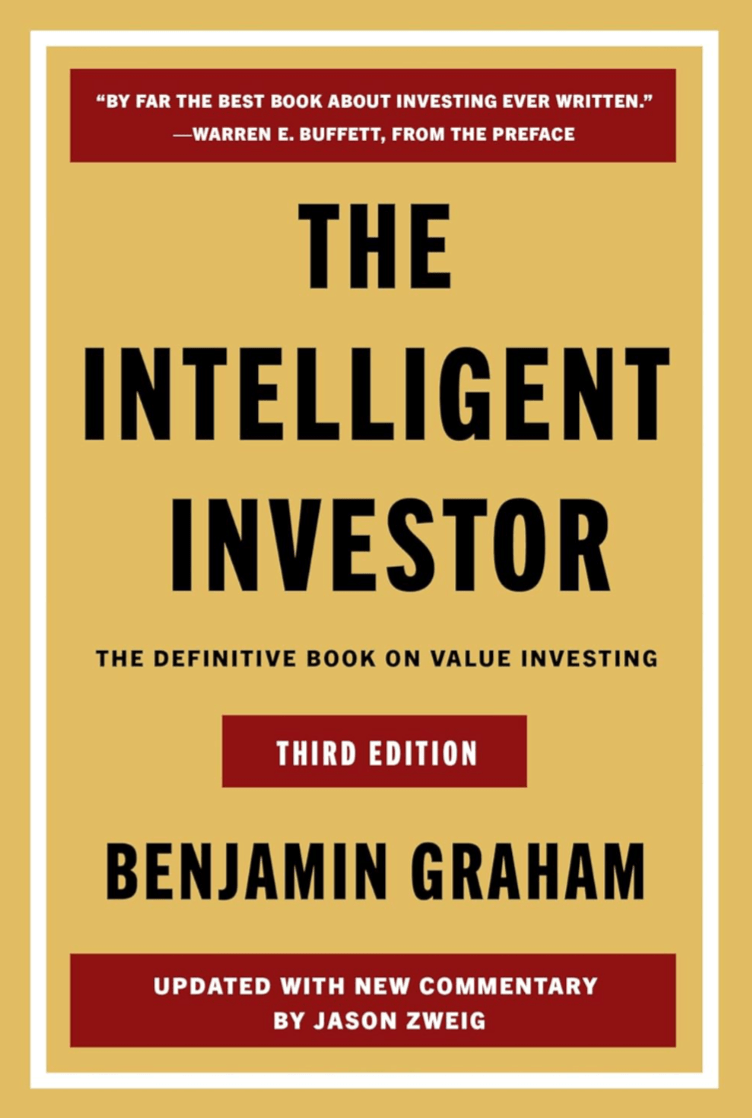
Let's start with Benjamin Graham's The Intelligent Investor, a book often referred to as the “investment bible.” Graham was Warren Buffett's mentor, and his approach to market analysis became the basis for the concept of “value investing,” i.e., investing in undervalued assets. In the book, the author explains that success in the market is based not on predicting its movements, but on rational analysis and the ability to separate emotions from decisions. He teaches how to evaluate companies based on their real value, rather than what is written about them in the news or how their stock price is performing today.
Fascinating is the image of “Mr. Market,” which Graham uses as a metaphor. He is like an emotional partner who comes to you every day, offering to buy or sell shares at different prices, depending on his mood. The author reminds us that the market is not always rational, and the role of an investor is not to succumb to this mood, but to maintain common sense. The book teaches us to think long-term and not let panic or excitement influence our financial behavior. This is the foundation on which all further knowledge is built.
Key ideas of the book:
1)The margin of safety principle - An investor should buy assets with sufficient value reserves so that, in the event of market fluctuations, they do not lose their investment. This is a kind of “safety cushion” against risk.
2) The difference between investing and speculation - Graham clearly distinguishes between the two approaches: investors act on fundamental value, while speculators act on short-term expectations.
3) The behavioral aspect - Graham reminds us that an investor’s greatest enemy is himself. Fear and greed can destroy even the best strategy.
Rich Dad, Poor Dad by Robert Kiyosaki

Another book that is hard to ignore is Robert Kiyosaki's Rich Dad, Poor Dad. This text has become popular not only among investors but also among those who are just beginning to understand financial literacy. Kiyosaki shares the story of two different mindsets: the “poor dad,” who follows traditional advice about stable employment and savings, and the “rich dad,” who teaches how to understand money through assets, investments, and financial independence.
The main strength of this book is its simplicity and accessibility. Kiyosaki gives readers tools they can use right away: understanding the difference between assets and liabilities, building their own financial flow, and, most importantly, taking responsibility for their economic lives. The book motivates millions of people to overcome their fear of investing and start moving toward financial freedom.
Key ideas of the book:
1) Assets and liabilities - Assets put money in your wallet, liabilities take it away. Understanding this simple concept can radically change your financial life.
2) Financial education is more important than a degree - Kiyosaki emphasizes that students are rarely taught money management and that this skill determines success.
3) Passive income as the primary goal - Investing is the key to financial freedom.
Thinking, Fast and Slow by Daniel Kahneman
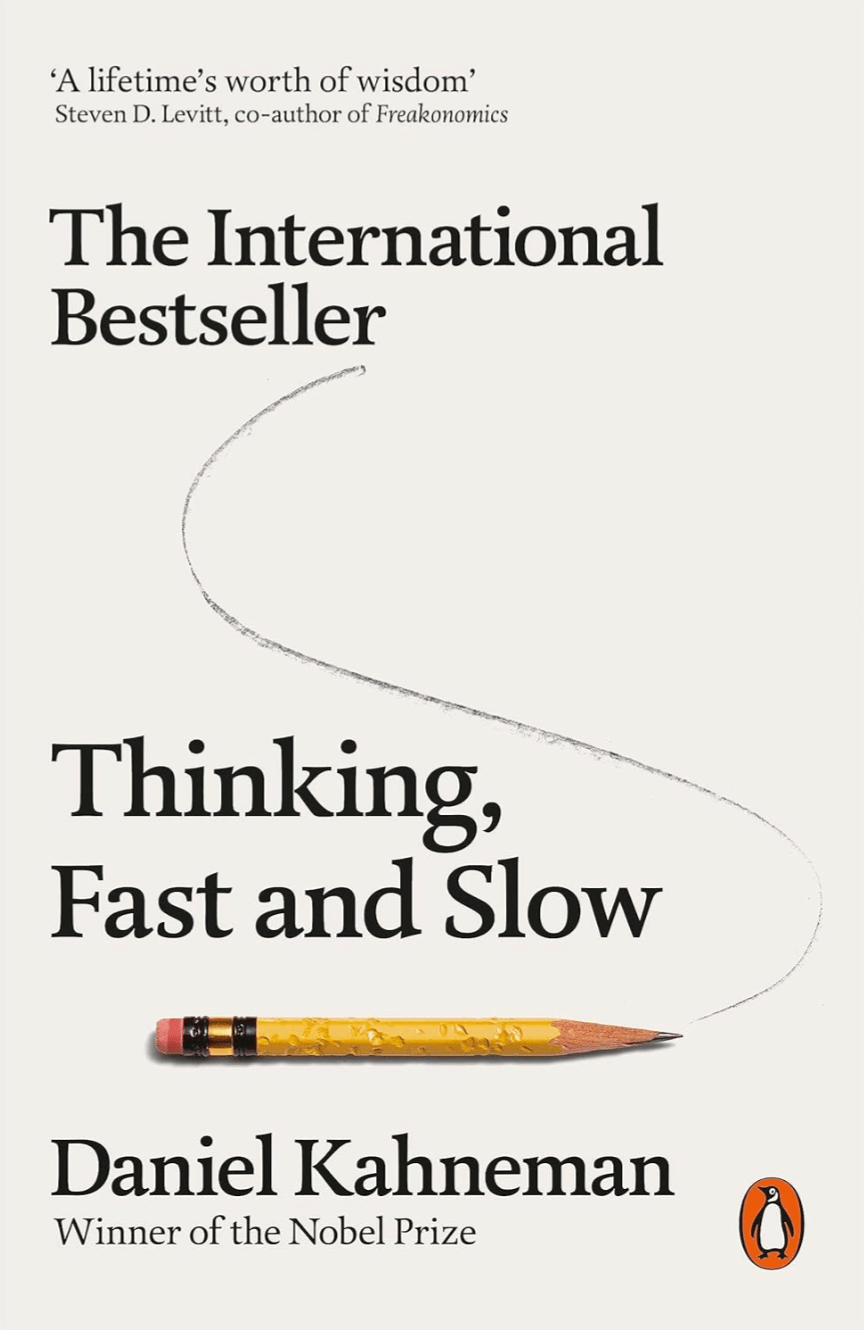
After Graham's analysis, it is essential to refer to a book that explains why thinking sometimes fails us at the most crucial moments. This is where Daniel Kahneman comes in with his remarkable work Thinking, Fast and Slow. It is a study of how our brain works and why we tend to make mistakes in situations of risk and uncertainty. Kahneman is a Nobel Prize-winning economist, and his ideas have become fundamental to modern behavioral economics.
In his book, he describes two distinct thinking systems: System 1, which is fast, intuitive, and automatic; and System 2, which is slow, deliberate, and rationally analyzes and evaluates situations. Investors constantly balance between these two systems. For example, fear of loss forces one to sell assets too early, while greed forces one to buy too late. Kahneman reveals several cognitive biases that influence decision-making: overconfidence, confirmation bias, the anchoring effect, and irrational fear of loss.
For investors, this book is like a mirror that reveals their own weaknesses. It doesn't offer specific strategies, but it helps explain why people sometimes make decisions that go against their own goals. It teaches to slow down, analyze, and not let instincts drive the long-term investment strategies. In a world where markets often behave unpredictably and information comes in every second, this knowledge is invaluable.
Key ideas of the book:
1) Cognitive biases - Overconfidence, fear of loss, and confirmation bias - all of these directly influence investment decisions.
2) Rational VS instinct - Kahneman proves that people are far from always being rational. This must be taken into account.
3) The role of statistics - A proper understanding of profitability helps to avoid many common mistakes.
The Richest Man in Babylon by George Clason
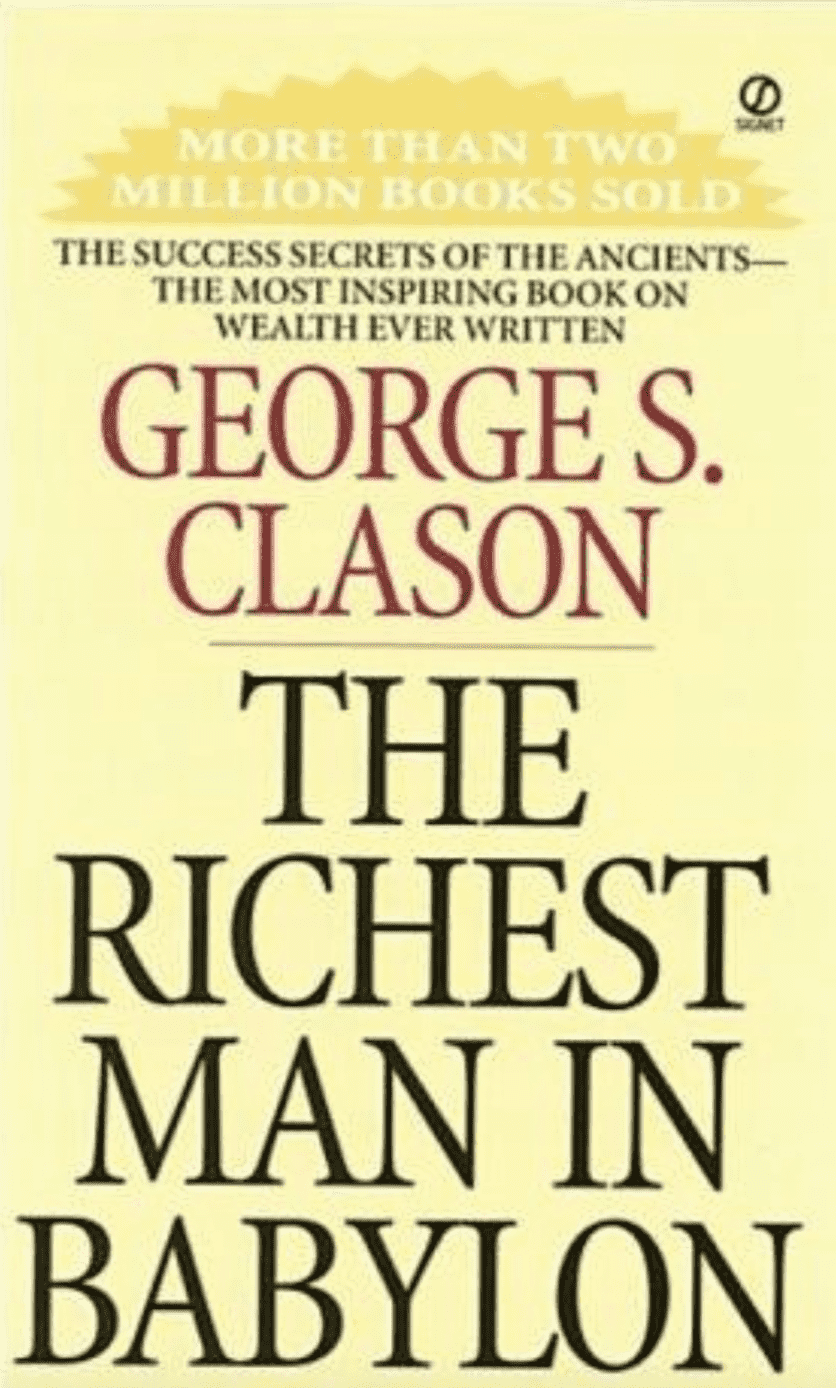
Moving on to George Clason's book The Richest Man in Babylon, it is worth mentioning that this publication has a special charm. It is written in the form of parables but contains practical, wise advice that has remained relevant for centuries. Clayson reminds us of the importance of simple financial habits: saving part of your income, controlling expenses, avoiding risky deals, investing wisely, and continually improving your skills.
The reader sees that financial stability does not require complex schemes or high income. It starts with discipline — and this is what beginners so often lack. Investing becomes much more effective when a person knows how to organize their finances, and this book is the perfect guide in this direction.
Key ideas of the book:
Set aside part of your income — always save at least 10% of what you earn.
Control your expenses — distinguish between needs and wants, and avoid unnecessary expenses.
Invest wisely — invest your money so that it generates a stable income.
Protect your capital — avoid risky schemes and untested investments.
Continue learning — improve your financial knowledge and seek new opportunities.
The Psychology of Money by Morgan Housel
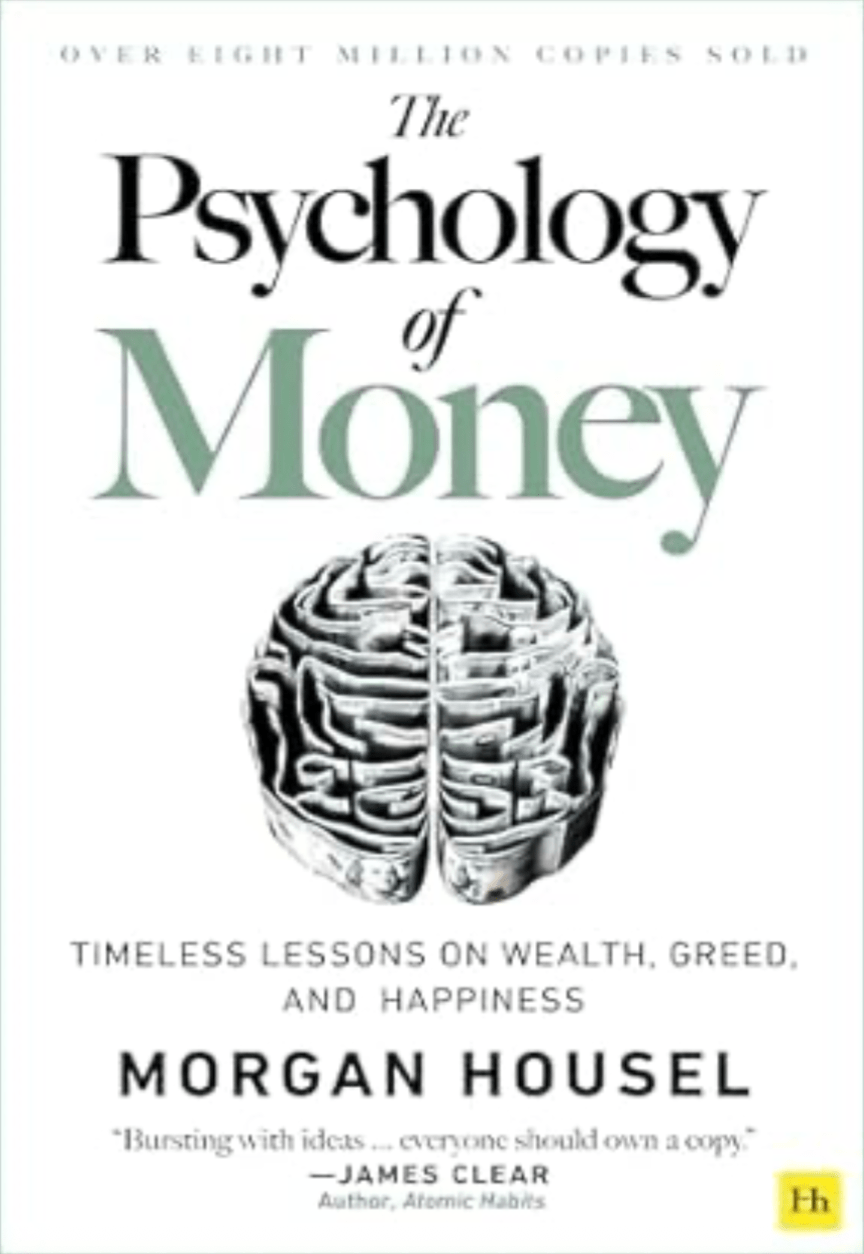
This list wraps up with a book that's been super popular in recent years: Morgan Housel's The Psychology of Money. It's not just about investing, but also about how we think about money in general. The author points out that financial decisions are rarely based on logic—they're far more often driven by experience, emotions, and even family history.
Hausel explains why two people with the same knowledge can make completely different decisions. He shows how important it is to view investments from a long-term perspective, accept mistakes as part of the process, and not let the market dictate emotions. This book helps develop patience, humility, and a commitment to financial stability — traits that make an investor successful in any era.
Key ideas of the book:
Financial success depends on behavior, not just knowledge — even with an excellent education, you can make mistakes due to emotions.
Long-term thinking — patience and the ability to wait for results are more important than short-term speculation.
Happiness and luck play a role — accepting that success sometimes depends on external factors is essential for mental comfort.
Financial decisions are subjective — different people see risks and opportunities differently; this is normal.
Mistakes are part of the process — learning from your own mistakes helps to shape an investor's wisdom.
Conclusion
If all the wisdom of these five books is summarized, it becomes clear that investing is not only about strategy or analytics. It is also about psychology, discipline, behavior management, and understanding the way people think. Graham teaches rationality, Kahneman explains the mechanisms of the brain, Kiyosaki motivates, Clason reminds of discipline, and Hausel reminds of human nature when it comes to money.
None of these books offer magic formulas, but together they form a complete vision of investing that helps people move more confidently along their financial path. They provide an opportunity not only to increase capital but also to build a solid foundation that can withstand the test of time, market fluctuations, and personal doubts. And that is their actual value.