


What is a Trading Halt and Why It Matters for Investors and Traders
Why Are Trades Halted?
The reasons for a halt vary, but they all aim to maintain market stability and protect participants. Here are the main ones:
Pending significant news. If a company is about to announce something major, like a merger, bankruptcy, or financial report, trading may be halted to give all market participants an equal chance to react.
Sharp price surge or drop. When a stock's price skyrockets or plummets, a halt helps prevent panic or manipulation, giving traders time to assess the situation.
Regulatory investigation. If there's suspicion of fraud or violations, regulators may suspend trading to investigate the details.
Volatility Trading Pause Study
This study did not process halts related to Pending News Halts (awaiting important news), as their nature depends more on external information factors than pure volatility. The goal was to develop a model for initial assessment of potential losses when shorting highly volatile stocks.
The short entry model relied on the price crossing a 15-period moving average. In other words, it considered a "Backside Short" strategy - entering short after the initial upward impulse exhausts itself and the price begins to reverse. This differs from a Frontside Short, where traders try to enter at the peak of the move, which is usually riskier.
The study focused on analyzing "Volatility Trading Pauses" in the context of stocks with sharp price increases-so-called "pumps." The phenomenon of trading halt often occurs on pre-market or during the main session, when a stock's price surges due to hype, speculative interest, or coordinated actions. The main objective was to understand how these pauses affect trading highly volatile stocks, especially for short sellers. It analyzed halt triggers, price behavior after resumption, and potential risks.
What is a Volatility Trading Pause?
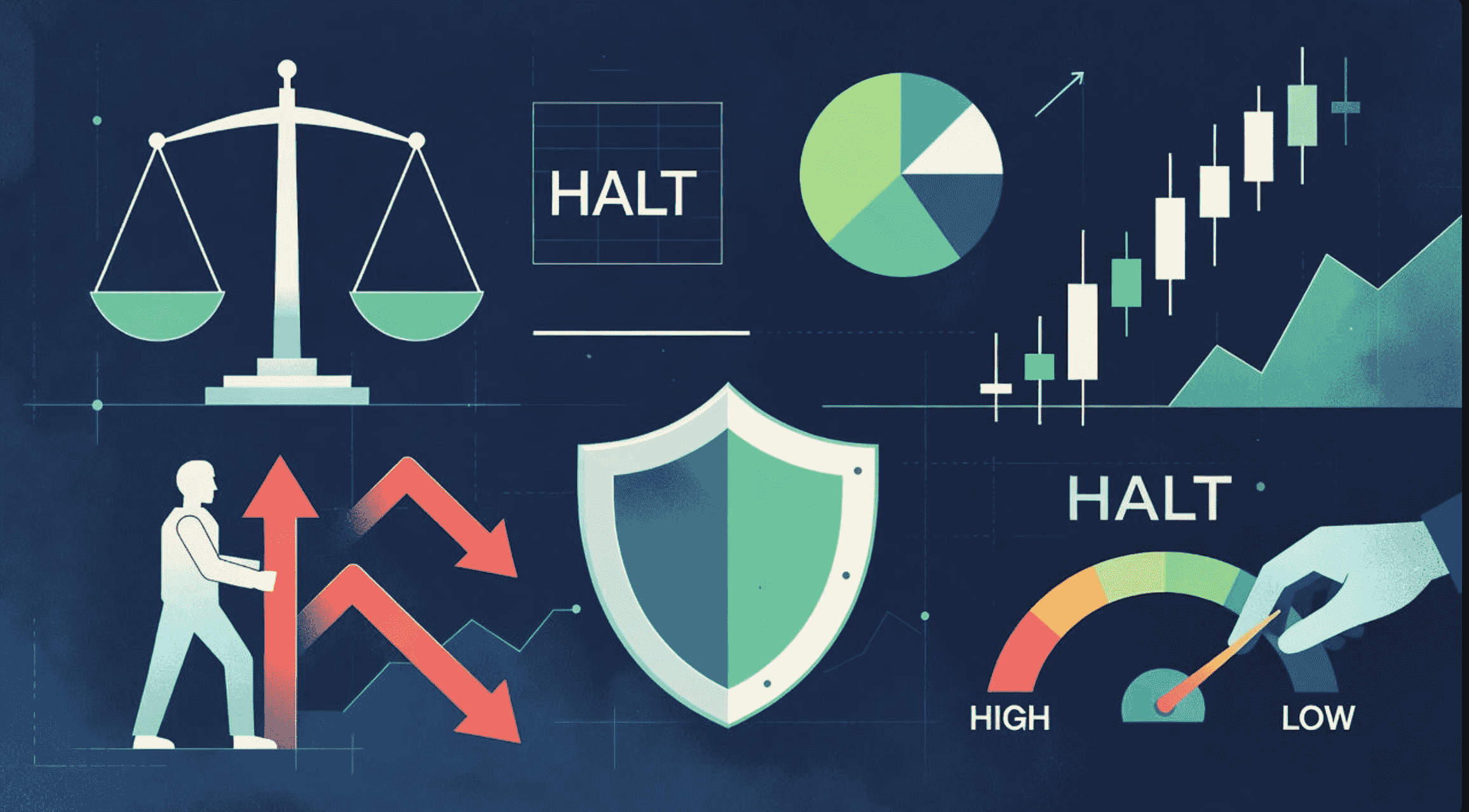
A Volatility Trading Pause is a short-term trading halt triggered when a stock's price exceeds established volatility limits under the LULD (Limit Up-Limit Down) mechanism. This system operates on major U.S. exchanges - NASDAQ, NYSE, and AMEX, to curb extreme price swings. For example, if a stock surges or drops by a certain percentage within minutes, trading pauses to let the market "catch its breath." The goal is simple: prevent panic, speculation, and manipulation that could destabilize the market. Here's important thing for new traders and investors - you should understand that it's a proven safe mechanism. These pauses are usually brief, from a few minutes to an hour, but their impact can be significant. They give participants time to evaluate, revise strategies, and prepare for next moves.
What Did the Study Reveal?
When pauses occur - Volatility Trading Pauses most often trigger near key price levels, like pre-market or session highs. These are zones where many traders place stop orders. Sometimes, a stock even "closes on halt" after breaking such levels, amplifying market pressure.
Price dynamics after halt - On average, the opening price after resumption exceeded the previous high by 10%. This means significant losses for short sellers, as the price continues moving against their position.
Risks for traders and investors - The study showed that without proper risk management, one halt can wipe out a trader's entire risk capital. If stops aren't set or risk is miscalculated, losses can be catastrophic, especially since exiting during a halt is impossible.
How to minimize impact - Avoiding Volatility Trading Pauses entirely is impossible, as they're part of market rules. However, traders can protect themselves with stop orders to cap losses and strategies that account for pauses. The key is ensuring one halt doesn't destroy long-term profitability.
Risk Management Tips
Since shorting after a pump carries high risks, here are practical recommendations for managing trading halt situations:
Limit position size. Risk no more than 1-3% of your deposit per trade, so one halt doesn't wipe out your capital.
Avoid trading in the first minutes after resumption, when volatility is highest and the market is unstable.
Build strategies for worst-case scenarios. Even if your idea is right, a halt can change the outcome. Design risk management so one halt doesn't break your overall strategy.
You can't fully protect against halts, but solid risk management builds a strategy where potential losses from a halt don't ruin long-term performance.