


Risk in trading: what it is and what effective risk means
Profit gets most of the attention in trading. Risk is what determines whether a trader stays in the market long enough to earn it. Every trade contains uncertainty. A strong setup can fail, a market can suddenly reverse, earnings can surprise investors, or volatility can increase within minutes. Even experienced traders regularly make decisions that don't work as expected.
The difference is often what happens when they are wrong. A $100 loss can be an ordinary part of a trading strategy. A $5,000 loss on the same idea can become a serious problem. The difference isn't necessarily the quality of the market analysis, it can simply be the amount of capital put at risk.
This is why risk management isn't about avoiding losses altogether. Losses are part of trading. The objective is to control their size, understand their potential impact, and make sure no single trade-or short series of trades-can cause disproportionate damage to the account. And this brings us to the idea of effective risk. It isn't simply “taking less risk.” It's about taking a calculated amount of risk that makes sense relative to your account size, position, potential return, and overall strategy.
What Does Risk Actually Mean in Trading?
Risk and volatility are often treated as the same thing, but there's an important difference. A highly volatile stock doesn't automatically make a trade excessively risky. If the position is small and the potential loss is controlled, the impact on the account may be limited.
At the same time, even a relatively stable asset can become dangerous if the position is oversized or heavily leveraged. For a trader, risk is better understood as the amount of capital that could be lost if the trade doesn't work as planned.
Imagine two traders with $10,000 accounts. Both buy the same stock at the same price. The first puts $8,000 into the position without deciding when to exit. The second determines in advance that the maximum planned loss should be $100 and sizes the position accordingly. Same stock. Same market movement. Completely different risk. That's because actual trading risk depends on several factors: position size, entry and exit levels, volatility, liquidity, portfolio concentration, and leverage.

What About Leverage?
Leverage or credit leverage allows traders to control a position larger than the amount of their own capital committed to it. For example, leverage of 1:5 can provide exposure of roughly $5,000 using $1,000 of capital, depending on the product and margin requirements. This can magnify gains, but it magnifies losses as well.
A relatively small move in the underlying asset can therefore have a much larger impact on the trader's capital. The important principle is simple: leverage doesn't make a trading idea better. It makes the consequences of being right or wrong larger.
What Is Effective Risk?
Effective risk means taking a predefined and controlled amount of risk that makes sense relative to your capital, strategy, and potential return. It starts before the trade is opened. Consider a trader with a $20,000 account. Suppose their strategy allows for a maximum planned risk of 1% per trade.
That means: $20,000 × 1% = $200
Now suppose the trader wants to buy a stock at $50 and determines that the original trading thesis would no longer make sense if the price falls to $48.
The planned risk per share is: $50 − $48 = $2
With a maximum planned loss of $200: $200 ÷ $2 = 100 shares
The position would therefore contain 100 shares, worth $5,000 at the entry price. Notice the order of the decision: acceptable risk - exit level - position size, not: position size - hope the risk is acceptable. The specific 1% figure isn't a universal rule. Different strategies and traders can use different limits. What's important is that the potential loss is considered before, rather than after, the position is opened. And there's another important detail: a stop-loss doesn't guarantee that a position will close at the exact specified price. During gaps, sudden volatility, or periods of poor liquidity, execution may occur at a worse price, increasing the actual loss.
How Much Should You Risk Per Trade?
You'll often hear about the 1% rule, which suggests risking no more than 1% of trading capital on a single position. It can be a useful framework, particularly for understanding position sizing, but it isn't a universal law. Some traders may risk 0.5% per position. Others may use different limits depending on volatility, strategy, experience, and overall portfolio exposure.
What matters is understanding what repeated losses can do to an account. Suppose two traders start with $10,000. One risks approximately 1% of current capital on each trade. After five consecutive full-risk losses, around $9,510 remains.
Another risks 10% of current capital each time. After five consecutive losses, only around $5,905 remains. That's a drawdown of roughly 41%. And recovering from large losses becomes progressively more difficult:
A 50% loss followed by a 50% gain does not bring an account back to its starting value. If $10,000 falls to $5,000, the remaining capital must gain 100% to return to $10,000. That's why protecting capital from severe drawdowns is such an important part of risk management.
Risk/Reward: Why You Don't Need to Win Every Trade
Another common misconception is that successful trading requires an extremely high percentage of winning trades. Not necessarily. A trader's win rate tells only part of the story. You also need to know how much the trader typically makes on successful positions compared with how much is lost on unsuccessful ones. This is where the Risk/Reward ratio (R/R) becomes useful.
Suppose you buy a stock at $100. Your planned exit if the trade fails is $95, so the potential loss is $5 per share. Your target is $110, giving you $10 of potential upside. The planned Risk/Reward ratio is: 1:2 In other words, you're accepting $1 of potential risk for $2 of potential reward. Now consider 10 hypothetical trades in which the average winner is $200 and the average loser is $100.
Only four trades are successful: 4 × 200=+800
Six lose money: 6 × 100=-600
The result is still: +$200
That's with a win rate of only 40%, before commissions, slippage, taxes, and other trading costs. The reverse can happen too. A trader might win 80% of the time but still lose money if a few losing trades are significantly larger than the winners. However, an attractive R/R doesn't automatically make a trade good.
A theoretical ratio of 1:5 looks impressive, but it isn't particularly useful if the probability of reaching the target is extremely low. That's why Risk/Reward should be evaluated together with win rate and the actual historical performance of the strategy.
The Risk Traders Often Forget
Calculating risk on individual trades is important, but there's another layer: portfolio risk. Imagine a trader holds five positions:
a semiconductor company;
an AI infrastructure company;
a cloud software stock;
a cybersecurity company;
a technology ETF.
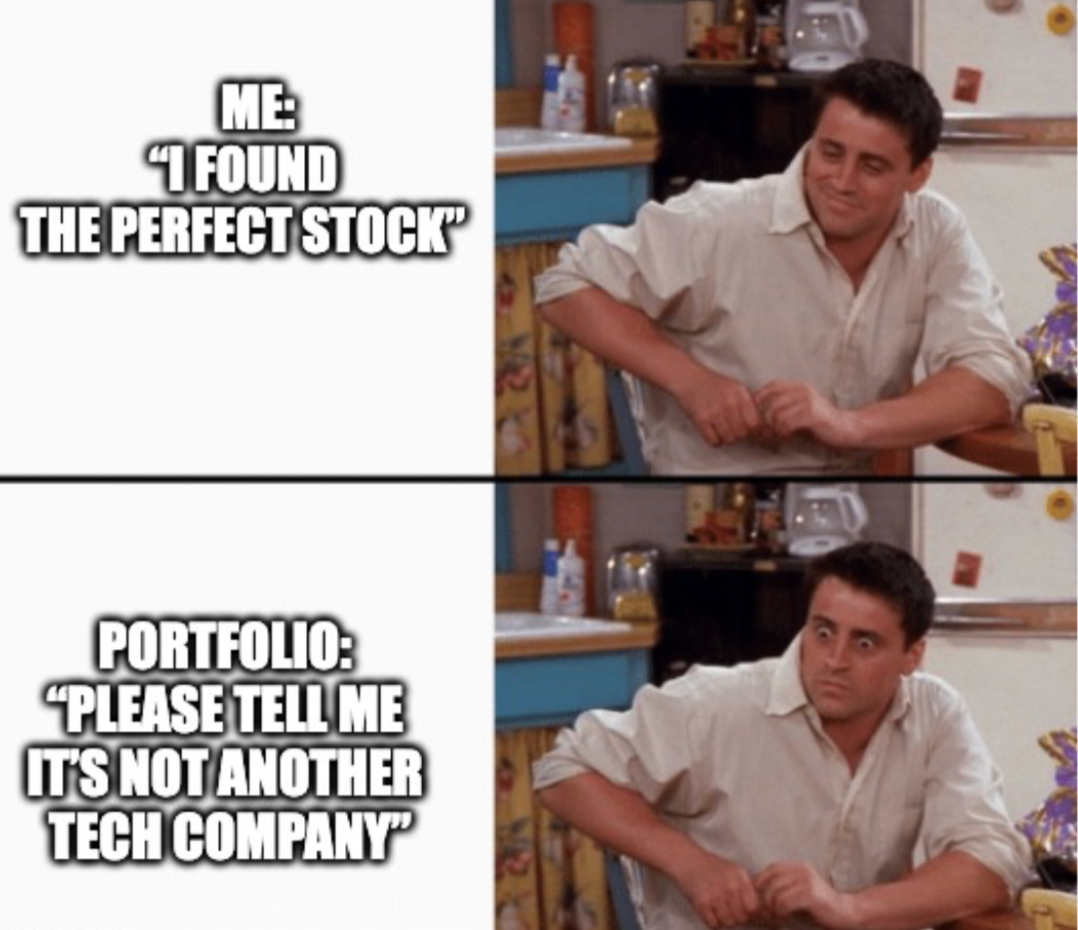
Technically, those are five different positions. However, are they five completely different risks? Not necessarily. If the technology sector experiences a sharp sell-off, several or even all of those positions may fall at the same time. This is known as correlation risk.
The same thing can happen when several trades depend on one economic factor, such as interest rates, oil prices, consumer spending, or the U.S. dollar. As a result, a portfolio containing many positions isn't automatically diversified. Effective risk management therefore requires traders to look beyond each individual position and consider how much could be lost if several correlated trades move against them at the same time.
Common Risk Management Mistakes
Many large trading losses don't begin with a terrible market prediction. They begin when a manageable loss is allowed to become an unmanageable one. One common mistake is oversizing the position. Even a reasonable setup becomes dangerous if too much of the account depends on its success.
Another is moving a stop-loss farther away simply because the trader doesn't want to accept the loss. A planned $200 risk can gradually become $400, then $700, while the original trading thesis has already failed. There's also revenge trading. After losing money, a trader increases the size of the next position to recover the loss quickly. If that trade also fails, both financial losses and emotional pressure increase.
Finally, leverage can amplify all of these mistakes. One practical way to reduce emotional decision-making is to define the key parameters before entering a trade: the reason for entering, the conditions that would invalidate the idea, the acceptable loss, the position size, and the potential target. The market can still surprise you. However, at least the amount of risk isn't being decided in the middle of an emotional reaction.
Conclusion
No trader can control where the market goes next. You can't control an unexpected earnings announcement, a sudden shift in sentiment, a geopolitical event, or a sharp increase in volatility. However, you can have much more control over how much capital you expose to those uncertainties. That's the real purpose of risk management.
Effective risk management means knowing the potential consequences before entering a position. It means choosing a position size that fits your account, understanding the effect of leverage, comparing potential loss with potential reward, and considering how one trade interacts with the rest of your portfolio.
It also means accepting something that can initially feel uncomfortable: being wrong is part of trading. The objective isn't to build a strategy that never loses. It's to build one where losses remain manageable enough for the strategy to continue operating. Because over time, trading success isn't determined only by how much you make when you're right. It's also determined by how much you keep when you're wrong. And that's perhaps the simplest definition of effective risk: taking enough risk for a successful trade to matter, but never so much that one unsuccessful trade can take you out of the game.