


Ukrainian stocks on the U.S. stock market
For a long time, when people thought about Ukrainian business, they rarely connected it with Wall Street or Nasdaq. Ukrainian companies were usually seen as local players, outsourcing firms, or startups that eventually moved abroad. However, over the past few years, that picture has started to change.
Today, several companies with Ukrainian roots are either listed directly on U.S. exchanges or closely tied to Ukrainian founders and talent. Some are mature businesses with millions of customers. Others are still early-stage and highly speculative. Together, they show something important: Ukraine is becoming more visible in global capital markets.
1. Kyivstar: the first direct Ukrainian listing
The clearest and most direct example is Kyivstar Group Ltd. This entity became the first major Ukrainian company to list directly on a U.S. exchange under the ticker KYIV. The company came to Nasdaq through a SPAC deal backed by its parent company VEON, giving international investors a way to invest directly in a Ukrainian business. Kyivstar is not a startup. It is already a large telecom operator with more than 23 million mobile subscribers and over 1 million home internet users. Beyond telecom services, the company also owns digital products such as Helsi, Kyivstar TV, Uklon, and Tabletki.ua.
That makes Kyivstar different from many “hot” IPO stories. Investors are not buying an idea - they are buying a functioning business with real cash flow.
Based on the latest pre-listing figures, Kyivstar generated around $919 million in revenue and roughly $515 million in EBITDA. At the time of its public listing, the company was valued at roughly $2.2–2.6 billion, which implies an EV/EBITDA multiple of about 4–5. That is lower than what many telecom companies trade at globally, where multiples are often closer to 5–8. That discount likely reflects one major thing: country risk.
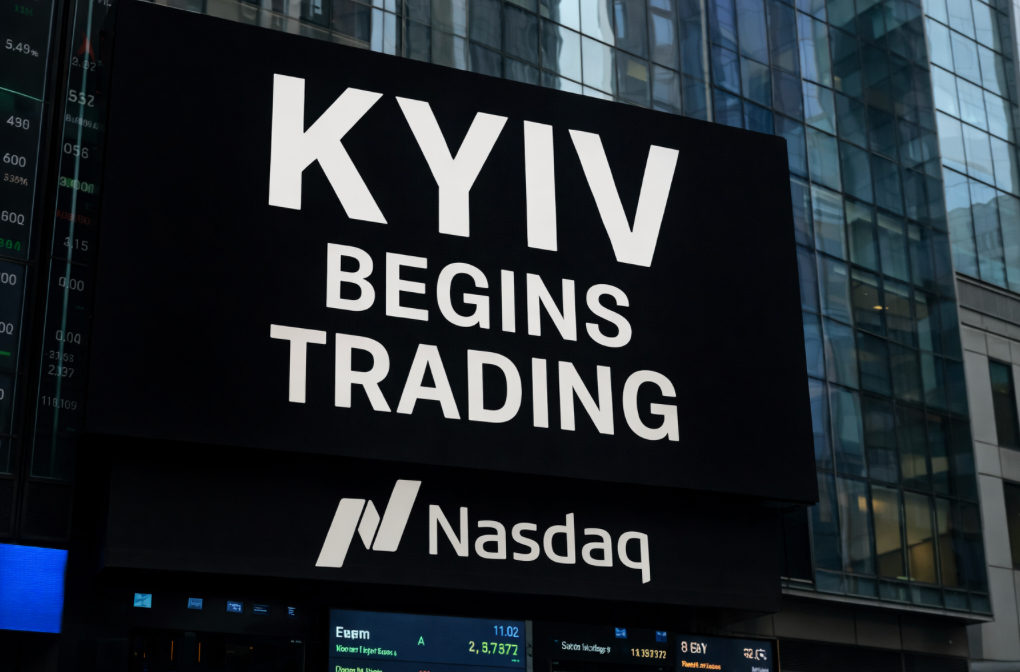
Investors are not just buying a telecom company. They are buying exposure to Ukraine itself. And that means Kyivstar trades with both the strengths of a stable telecom business and the uncertainty of a country still at war. However, the fact that Kyivstar was able to complete a Nasdaq listing at all is significant. It shows that there is real demand for Ukrainian companies if they have scale, recognizable brands, and stable business models.
2. Swarmer: the opposite of Kyivstar
If Kyivstar represents the “stable infrastructure” side of Ukraine, then Swarmer represents the high-risk, high-growth side.
Swarmer is a defense-tech company focused on drone swarm software - systems that allow one operator to coordinate many drones at once. The company filed for its Nasdaq IPO in early 2026 and listed under the ticker SWMR. The IPO itself was small, raising around $15 million at about $5 per share. But once trading started, the stock exploded. Swarmer surged more than 500% on its first trading day and nearly 1,100% within two days. At one point, shares traded above $30 after being priced at only $5.
Why did this happen?
Partly because defense technology is one of the hottest sectors in the market right now. Investors are increasingly focused on drones, autonomous systems, and military software because of global conflicts in Ukraine and the Middle East. However, there is also another factor: Swarmer is still a very small company.
Its 2025 revenue was only around $300,000, while losses reached about $8.5 million. On paper, that does not look attractive. But the company also reported more than $16 million in confirmed orders and another $16 million in expected revenue, which gave investors a reason to believe growth could accelerate quickly.
This is why Swarmer is such a different type of investment from Kyivstar. Kyivstar is about stability, Swarmer is about speculation. Kyivstar offers slower, more predictable growth. Swarmer offers the possibility of huge upside - but also the possibility of major losses if expectations are not met.
3. PayPal: a Ukrainian founder behind one of America’s biggest fintech companies
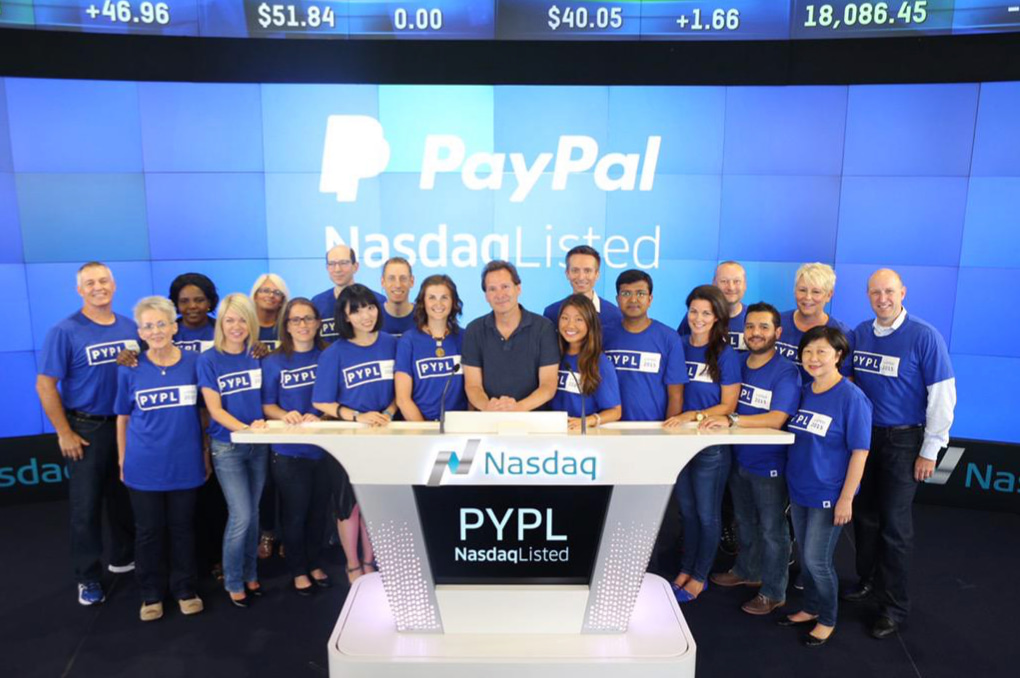
PayPal is not a Ukrainian company, but it still has an important Ukrainian connection. One of PayPal’s co-founders, Max Levchin, was born in Kyiv and moved to the United States in 1991. He later became one of the key figures behind PayPal’s anti-fraud systems and helped build what would become one of the most important fintech companies in the world.
That story matters because it shows another side of Ukrainian participation in the U.S. stock market. Not every Ukrainian success story is about a company headquartered in Ukraine. Sometimes the Ukrainian connection is through the founder, the engineer, or the entrepreneur behind the business. PayPal itself is now a mature company worth tens of billions of dollars. It is no longer a fast-growth stock, but it remains one of the best-known examples of a company built in part by a Ukrainian-born entrepreneur.
For many investors, PayPal is also a reminder that Ukrainian talent has been influencing Silicon Valley for decades - even if people did not always notice it.
4. GitLab: from a house in Ukraine to Nasdaq
Another important example is GitLab. GitLab was created in 2011 by Ukrainian programmer Dmytro Zaporozhets, who started building the platform from his home in Ukraine. Years later, the company went public on Nasdaq under the ticker GTLB. Unlike Kyivstar, GitLab is not tied directly to the Ukrainian economy. Unlike Swarmer, it is not a speculative micro-cap stock. GitLab is a large global software company focused on developer tools, DevOps, and AI-assisted coding.
The company has benefited from the broader AI trend, with revenue growing more than 30% year-over-year in some recent quarters. GitLab’s revenue for fiscal 2025 was expected to reach roughly $742–744 million.
GitLab is interesting because it sits somewhere in the middle. It has more maturity than a defense-tech startup like Swarmer, but more growth potential than a telecom company like Kyivstar. For investors looking for a “Ukrainian-rooted” company with global scale and strong exposure to AI and software development, GitLab may be one of the most attractive names.
5. Conclusion
When you put all four stories together, a bigger picture starts to appear. Ukraine is not represented on the U.S. stock market in only one way. There is the infrastructure side, represented by Kyivstar. There is the defense-tech side, represented by Swarmer. There is the immigrant-founder success story, represented by PayPal. And there is the global software story, represented by GitLab.
These companies are different in almost every way - industry, size, risk, and maturity. But together, they show that Ukraine is becoming more visible not just as a country, but as a source of businesses, founders, and technologies that matter globally. For investors, that creates opportunities - but also requires understanding. Because buying Kyivstar is very different from buying Swarmer. And buying GitLab is very different from buying PayPal.
The important thing is to know what kind of story you are investing in.