


How Do Interest Rates Affect the Stock Market?
If you've ever noticed that stock markets sometimes rise or fall immediately after a central bank announces an interest rate decision, you're not alone. Every time the Federal Reserve, the European Central Bank, or another major central bank changes interest rates, financial markets react - sometimes within seconds. News headlines often describe these decisions as market-moving events, and investors closely analyze every word from central bank officials. But why?
After all, what does the cost of borrowing money have to do with the price of technology stocks, bank shares, or even your investment portfolio? The answer is: quite a lot.
Interest rates influence almost every part of the economy. They affect how much consumers spend, how much companies borrow, how profitable businesses become, how attractive bonds are compared to stocks, and even how investors value future earnings.
Whether you're a long-term investor building wealth over decades or a short-term trader looking for opportunities, understanding the relationship between interest rates and the stock market can help you make more informed investment decisions and better understand why markets behave the way they do.
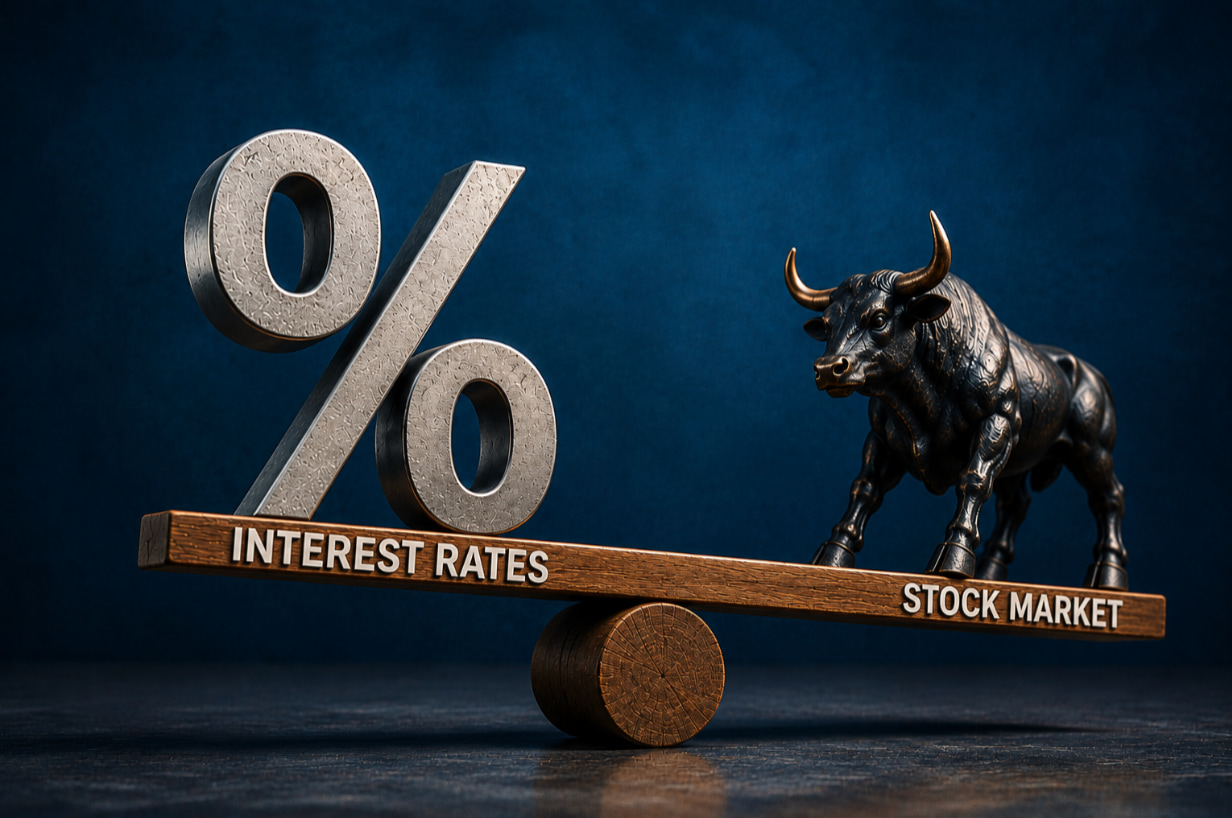
Why Interest Rates Matter to Investors
Interest rates represent the cost of borrowing money. When central banks raise interest rates, borrowing becomes more expensive. Mortgages, business loans, and corporate financing all become costlier, while savings accounts and fixed-income investments typically offer higher returns.
When central banks lower interest rates, the opposite happens. Borrowing becomes cheaper, businesses are more willing to invest, consumers are more likely to spend, and economic activity often accelerates, because interest rates influence spending, investment, inflation, and corporate profitability; they naturally have a significant impact on financial markets.
This is why central bank meetings are among the most closely watched events on the economic calendar. Markets aren't reacting only to today's decision - they're reacting to what that decision may mean for the economy over the coming months or even years.
How Interest Rates Influence the Stock Market
Interest rates affect stocks through several different channels.
Higher borrowing costs reduce corporate profits
Many businesses rely on borrowing to finance expansion, invest in new equipment, or acquire competitors. When interest rates rise, those loans become more expensive. Companies may delay investments, reduce hiring, or face higher financing costs, all of which can put pressure on future earnings. Since stock prices are largely based on expectations of future profits, higher interest rates can reduce investor optimism.
Consumers may spend less
Interest rates don't affect businesses alone. Higher mortgage rates, car loan rates, and credit card interest rates make borrowing more expensive for households as well. As consumers spend less, many companies generate lower revenue, particularly businesses that depend on discretionary spending. Retailers, luxury brands, travel companies, and automobile manufacturers may all feel the impact.
Bonds become more attractive
One of the biggest reasons interest rates influence stock prices is competition between different asset classes. When interest rates are low, government bonds often offer relatively modest returns. As a result, investors may choose to allocate more money toward stocks in search of higher long-term growth.
When rates increase, however, newly issued bonds often provide higher yields with significantly lower risk. For some investors, particularly those approaching retirement or seeking stable income, this makes bonds a more attractive alternative to equities. Money flowing from stocks into bonds can place downward pressure on equity markets.
Future earnings become less valuable
One concept many beginner investors overlook is that stock prices reflect expectations about the future - not just today's profits. Companies expected to generate significant earnings many years from now are particularly sensitive to changes in interest rates. Why?
Future cash flows are discounted back to today's value. When interest rates rise, the present value of those future earnings falls. This is one reason why fast-growing technology companies often experience larger price swings during periods of rising interest rates than mature dividend-paying businesses.
Which Sectors Benefit from Higher or Lower Rates?
Not every industry responds to interest rates in the same way. Some sectors benefit from rising rates, while others tend to perform better when borrowing costs remain low.
Technology and Growth Stocks
Growth companies often depend on future earnings rather than current profits. As interest rates rise, investors typically become less willing to pay premium valuations for future growth. This is why technology stocks frequently experience increased volatility during tightening cycles.
Financial Institutions
Banks often benefit from moderate interest rate increases. Higher rates may allow banks to earn larger spreads between the interest they pay depositors and the interest they charge borrowers. However, extremely high rates can eventually reduce lending activity, limiting this benefit.
Real Estate
Real estate companies are generally sensitive to borrowing costs. Higher mortgage rates can reduce housing demand, while developers may face higher financing expenses. Lower interest rates, by contrast, often stimulate both residential and commercial real estate markets.
Consumer Discretionary
Businesses selling non-essential products and services often feel the effects of changing consumer spending. When borrowing costs increase and household budgets tighten, discretionary spending may decline. Conversely, lower rates often support stronger consumer demand.
Utilities and Consumer Staples
These sectors are often viewed as more defensive. Companies providing essential goods and services usually experience more stable demand regardless of economic conditions. As a result, investors sometimes rotate toward these sectors during periods of rising interest rates or economic uncertainty.
The key takeaway is that interest rate changes don't affect every company equally. Some businesses face headwinds, while others may actually benefit from the changing environment.
How Different Investors Should Respond
The impact of interest rates also depends on your investment strategy.
Long-Term Investors
For long-term investors, changing interest rates should rarely trigger dramatic portfolio changes. Markets have experienced countless interest rate cycles over the past century, yet diversified portfolios have historically continued to grow over the long run. Rather than trying to predict every rate decision, many long-term investors focus on maintaining diversification, investing consistently, reviewing asset allocation, and avoiding emotional decisions during periods of volatility.
Interest rate cycles come and go, but a disciplined investment strategy often remains more important than accurately predicting central bank policy.
Short-Term Traders
Short-term traders often pay much closer attention to interest rate announcements. Even small surprises can lead to significant market volatility, creating opportunities for active traders. Economic indicators such as inflation reports, employment data, central bank speeches, or GDP releases can all influence expectations about future rate decisions.
However, increased volatility also increases risk. Many experienced traders focus on risk management rather than trying to predict every market reaction.
Common Mistakes During Interest Rate Cycles
Changing interest rates often creates uncertainty, and uncertainty can lead to poor investment decisions.
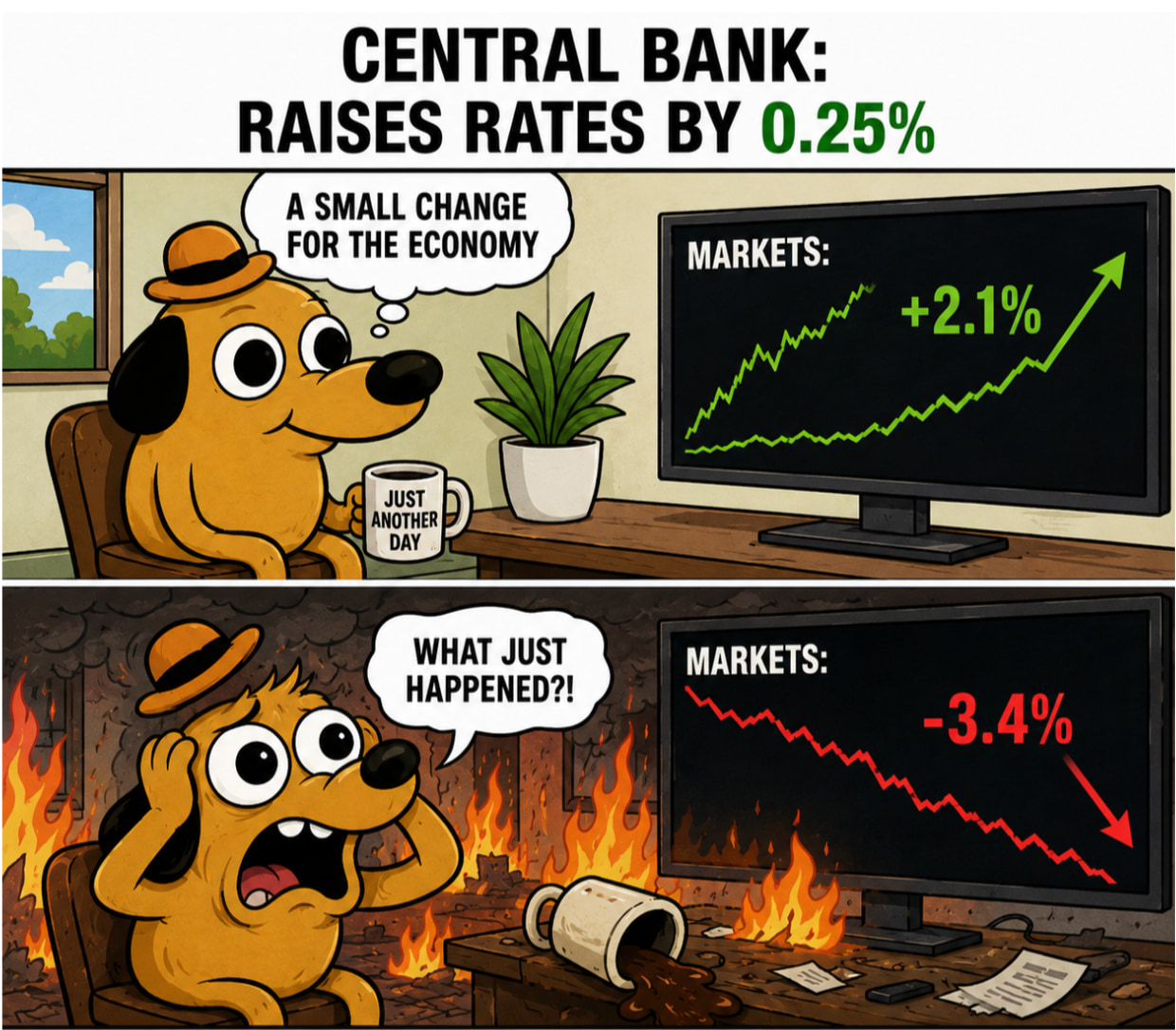
One common mistake is assuming that higher interest rates automatically mean stock markets will fall. History tells a more nuanced story. In many cases, interest rates rise because the economy is growing strongly. Corporate earnings may continue increasing even as borrowing costs rise.
Another mistake is reacting only to headlines. Markets don't respond solely to the interest rate itself - they respond to whether the decision was expected. Sometimes markets rally after a rate increase because investors were expecting an even larger hike.
Finally, many investors try to perfectly time interest rate cycles. The reality is that predicting central bank decisions consistently is extremely difficult. Professional economists frequently disagree on the future path of monetary policy. Instead of attempting to forecast every move, investors are often better served by understanding how different market environments may affect their portfolios over time.
Conclusion
Interest rates are one of the most powerful forces shaping financial markets. They influence borrowing costs, consumer spending, corporate investment, bond yields, business valuations, and ultimately stock prices, but their impact is rarely straightforward.
Higher interest rates don't automatically mean stocks will fall. Lower interest rates don't guarantee markets will rise. The relationship depends on the broader economic environment, investor expectations, corporate earnings, and countless other factors.
For investors, the most valuable lesson isn't trying to predict every central bank decision. It's understanding why those decisions matter and how they influence different parts of the market, because while interest rates may shape market conditions, successful investing still depends on the same core principles: building a diversified portfolio, managing risk, thinking long term, and making decisions based on strategy rather than short-term headlines.
Markets will continue to react to every interest rate announcement. The best investors are often the ones who understand the bigger picture behind those reactions.