


The Benefits of Dollar-Cost Averaging
Watching the stock market can feel like riding a roller coaster. One day prices are climbing, the next they're falling, and financial headlines constantly suggest that now is either the best or the worst time to invest. It's no surprise that many people hesitate before putting their money into the market. They wait for prices to drop, hope for the "perfect" entry point, or delay investing altogether because they're worried about making the wrong decision.
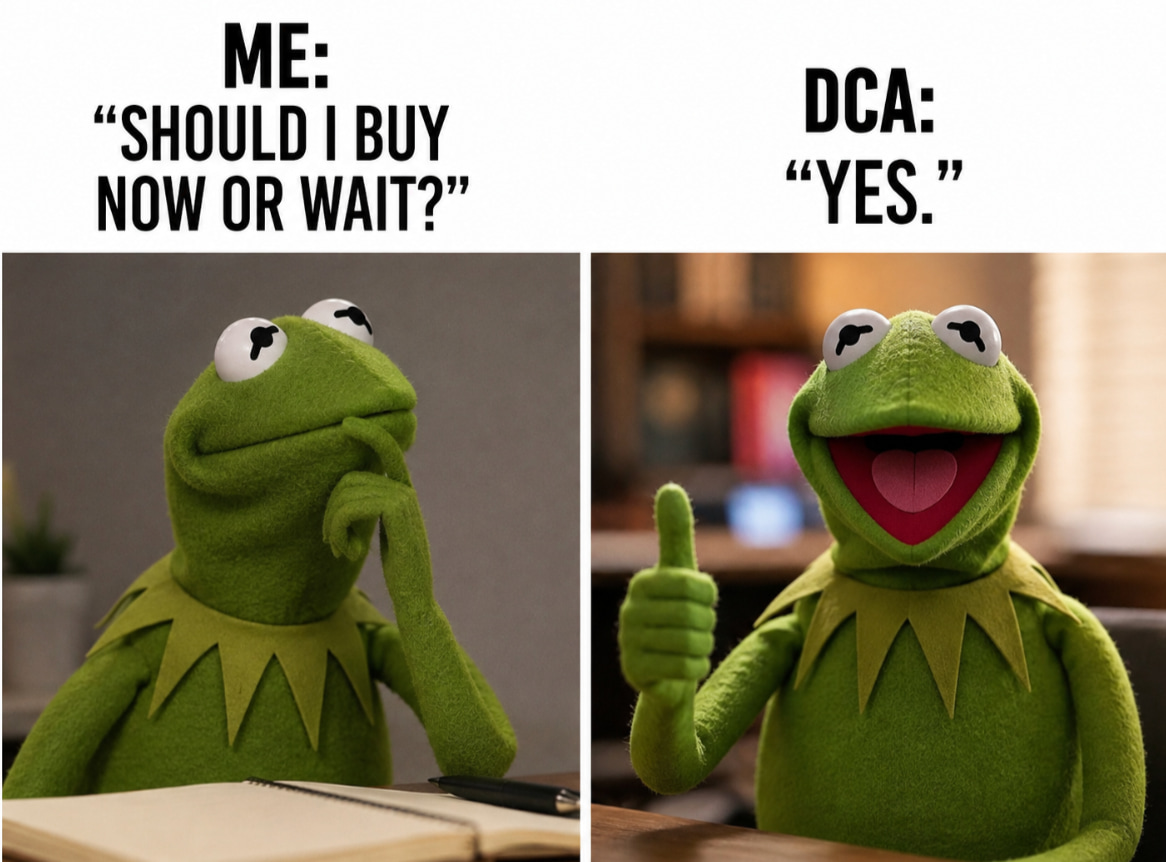
The reality is that consistently predicting short-term market movements is incredibly difficult-even for experienced investors. That's why many successful long-term investors choose a different approach. Instead of trying to guess where the market is headed next, they focus on investing steadily over time through a strategy known as Dollar-Cost Averaging (DCA).
What Is Dollar-Cost Averaging?
Dollar-Cost Averaging (DCA) is a simple investment strategy where you invest a fixed amount of money at regular intervals, regardless of whether the market is going up or down. For example, instead of investing $12,000 in a single transaction, you could invest $1,000 every month over the course of a year.
When prices are high, your fixed investment buys fewer shares. When prices fall, the same amount of money buys more shares. Over time, this helps average out the price you pay for your investments without having to predict the market's next move. The strategy is based on a simple principle: focus on consistency instead of trying to time the market.

Why Timing the Market Is So Difficult
Trying to buy investments at the lowest possible price sounds like the ideal strategy. The problem is that no one knows exactly when the market has reached a bottom-or when it's about to peak. Countless factors, including inflation, interest rates, economic data, company earnings, political events, and investor sentiment influence stock prices. Even professional fund managers with years of experience rarely consistently predict short-term market movements.
Many investors who wait for the "perfect" opportunity end up sitting on the sidelines while markets continue to rise. In hindsight, what seemed like an expensive market often turns out to have been a good buying opportunity. Instead of worrying about finding the perfect moment, Dollar-Cost Averaging helps you stay invested and keeps your money working over the long term.
How Dollar-Cost Averaging Reduces Emotional Investing
One of the biggest obstacles to successful investing isn't market volatility - it's human emotion. When stock prices are rising, it's easy to feel optimistic and invest more than planned because of fear of missing out. On the other hand, when markets fall sharply, fear often causes investors to stop investing or even sell their holdings at a loss.
Dollar-Cost Averaging helps reduce these emotional reactions by replacing guesswork with a consistent routine. Instead of making decisions based on daily news or market swings, you continue investing according to your schedule. This disciplined approach can help investors avoid emotional mistakes that often hurt long-term performance.
Building wealth rarely comes from making one perfect investment. More often, it's the result of small, consistent decisions repeated over many years. Investing regularly turns saving into a habit. Rather than waiting until you have a large amount of money available, you continue adding to your investments little by little. Over time, these regular contributions can add up to a significant portfolio.
For many people, this approach feels more realistic and sustainable than trying to invest large lump sums whenever the opportunity seems right.
Market downturns can be unsettling, especially for new investors. Seeing portfolio values decline is never enjoyable. However, lower prices can actually work in your favor when you're following a Dollar-Cost Averaging strategy. Because you're investing the same amount each time, falling markets allow you to purchase more shares than you could when prices are higher if markets recover over time-as they historically have after many downturns-those additional shares may contribute to stronger long-term growth.
Rather than viewing market declines as something to fear, long-term investors often see them as opportunities to continue investing at more attractive prices. Of course, no investment strategy eliminates risk, and markets can remain volatile for extended periods. However, Dollar-Cost Averaging encourages investors to stay focused on their long-term goals instead of reacting to short-term market fluctuations.
Is Dollar-Cost Averaging Always the Best Strategy?
Dollar-Cost Averaging offers many advantages, but it's important to understand that no investment strategy is perfect. If you already have a large amount of money ready to invest, investing it all immediately has historically produced higher returns than spreading investments over time in many market environments. That's simply because the money spends more time invested.
However, investing a large lump sum can be emotionally difficult, especially during periods of market uncertainty. For many investors, spreading investments over several months makes it easier to stay committed to their plan and avoid the stress of worrying whether they invested at exactly the right moment. The best approach depends on your financial situation, your comfort with risk, and your ability to stick to your investment strategy through changing market conditions.
Tips for Using Dollar-Cost Averaging Successfully
If you're planning to use Dollar-Cost Averaging, a few simple habits can make the strategy even more effective:
Invest on a regular schedule, whether that's every month or every payday.
Automate your contributions whenever possible so investing becomes part of your routine.
Continue investing during both strong markets and market downturns.
Stay focused on your long-term financial goals rather than short-term market movements.
Review your portfolio periodically, but avoid making frequent emotional changes based on daily headlines.
The goal isn't to find the perfect day to invest. It's to build a process you can follow consistently for years.
Conclusion
Dollar-Cost Averaging has remained popular for decades because it offers something many investors need: a simple, disciplined approach to investing. Rather than trying to predict where the market will move next, it encourages you to focus on what you can control-investing consistently and staying committed to your long-term plan. While no strategy can eliminate investment risk or guarantee profits, Dollar-Cost Averaging can help reduce emotional decision-making, smooth out the impact of market volatility, and make investing feel more manageable.
In the end, successful investing isn't about making one perfect decision. It's about building good habits, staying patient, and giving your investments the time they need to grow. Over the long run, consistency often proves far more valuable than trying to perfectly time the market. To learn more about tracking investment performance, please check this link.